Latest Pictures :
Recent Pictures
Tampilkan postingan dengan label care. Tampilkan semua postingan

Taking care of the big dogs


The friendship between dogs and humans lasts for 10 000 years. Along the ages, this relationship became even tighter. However, people need to consider the needs of their pets, and this is more important if we are talking about big dogs.

The dogs are raised anywhere, for different reasons. Some people are only looking for the friendships of dogs, while others need watch dogs, and the big ones are more suited for that. The dogs are also used by people with physical handicaps. Growing a dog implies responsibility, and it requires time and patience. It will change your life, but it can be in better or worse.

{[['']]}

Taking Care of the Red Footed Tortoise

The Red Footed Tortoises are friendly, cute, and they are great as pets. However, taking care of those animals is not as easy as you assume. It is true that it is not as hard as taking care of a dog, but a minimum of care is required if you want to have a healthy tortoise.

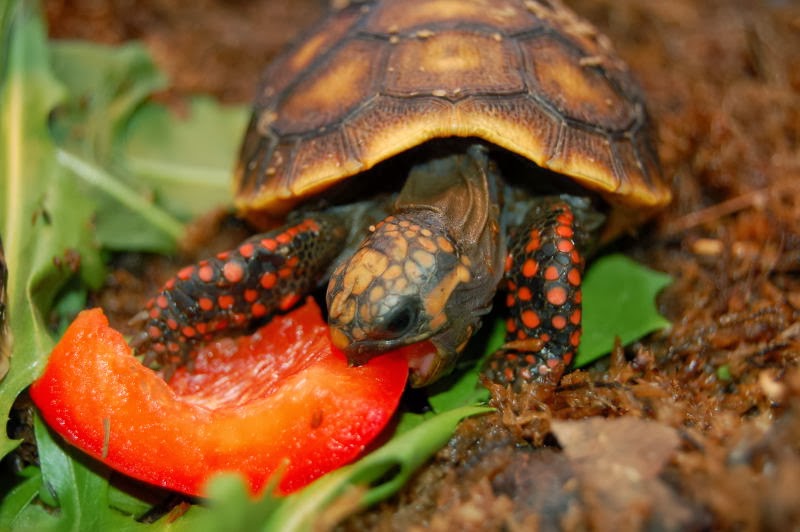
The Red Footed Tortoise eats leaf, fruits and supplements. It is important to ensure a good mix of those. This way, your turtle will be healthy for a long time. The leafy greens can ensure 70% of the food required by a red-footed tortoise. Lettuce, mustard greens and radicchio are perfect. At the beginning, only give them small quantities and see how they react. There are only general feeding rules for tortoises, but each one of them reacts differently to foods. While a tortoise might like the lettuce more than anything else, another one from the same species might not like it at all.

Unlike other tortoises that are really sensitive to certain types of fruits, the red-footed tortoise can eat a large number of fruits. Tomatoes, berries of any kind and apples are great. As for the supplements, you can choose the ones recommended by the veterinarian. When the turtle is still small, you need to ensure a solid quantity of calcium for the turtle. This can usually be taken from supplements. A turtle that lives freely in its natural habitat will know what food to choose, but if the tortoise stays at your home, it can only eat what you give her to eat, and this is why you should make sure that they have everything required.

The red-footed tortoise can be raised indoor and outdoor. For indoor housing, you should choose a special table that you can buy from the local pet store. Even if you choose to raise the turtle indoors, you should consider keeping it in the yard during the summer. When you make the switch from the indoor to the outdoor environment, take care of the turtle and make sure not to drop it. The carapace might be resistant, but the shock might damage internal organs of the pet. Moreover, if the carapace is not fully developed, a shock will probably damage its growth. The lighting is important for a tortoise also, as it should imitate the natural habitat perfectly. The tortoise also needs a place where it can hide, preferably made of stones to imitate a natural cave.  
{[['']]}

Breeding and Taking Care of the Land Tortoise

The majority of land tortoises that are kept in captivity are herbivores. While in the wild, they can eat some animal proteins; this is not the base of their diet. Meat can be avoided in captivity, but in this case, it must be replaced with food from the pet store, which contains everything required by a tortoise to survive.


The young land turtle eats every day. The older ones eat once every two days, considering the appetite. During the winter season, the older tortoises will eat once every two or three days.


80% of the diet of a land turtle must be composed of fibers, and 10-20% can be fruits and vegetables. Ideally, during the warm days, the tortoises should be taken on a grass field, where they can eat what they want. Make sure to find a lawn that was not treated with chemical products. This creates a great environment, so the tortoise can enjoy flowers, grass and even worms.


The most suited aliments for a tortoise are cabbage, spinach and lettuce. However, daily alimentation must not be resumed to a single type of vegetables. On the contrary, you can combine those, and you must also change some of them once every two or three days. For the small tortoises, those can be chopped and mixed. It is not recommended too much lettuce for tortoises that are in the growing phase, as this does not contain too much calcium.

Cucumbers and strawberries, as well as apples can be administrated in small portions. The tortoise might like sweet corn, but only in small quantities. Alfalfa is another recommended weed, but only in controlled quantities.


Don’t feed the tortoise with cats or dogs food, unless it is an emergency. The tortoise can live without food for a few days, so it is better to wait for a while and to buy the proper food, instead of risking the health of your beloved pet.

As hard as you would try, you will never be able to offer all the required minerals and good substances for your pet, so it is important to consult the tortoise at the veterinarian at least once or twice a year. The veterinarian will recommend you supplements, minerals and calcium. Moreover, they need access to a source of light. If you choose an indoor habitat, an UV ray is mandatory, but also a dark space in a corner of the pen, so the tortoise could hide when it is scared.

Related Posts:


Taking Care of the Red Foot Tortoise

Taking Care of the Leopard Tortoise

Taking Care of a Tortoise

Taking Care of a Baby Tortoise

Taking Care of the Small Tortoise

Taking Care of Baby Turtles
{[['']]}

Taking Care of the Small Tortoise


Many people want a small tortoise as a pet. “Small” is a relative concept for tortoises, considering the fact that those measure from 10 centimeters to 2 meters, depending on the species. The European, Greek and Russian tortoises are considered small-average tortoises, which can reach 20-25 centimeters at maturity. Sure, you can find smaller tortoises, but those are the most common types that you can also find in your local pet store.

The small tortoise is specialized for digging. Whether we are talking about the European and Russian tortoises that have to dig a hole to prepare hibernation for the winter, or about the sub-tropical species that need to dig to prepare the nest for the eggs, the small turtle is adapted for digging.


The hibernating turtles are inactive from October to March. As soon as the hibernation process is over, the turtle starts the mating period. From the middle of April, when this period is over, the tortoises will start to concentrate about food. Their advantage is that they don’t need to take care of the eggs, which means that they have enough time to eat, to accumulate fat deposits that will be really useful for the winter. This is also a disadvantage, because this leads to a small survival percentage of tortoises. The nests are found by predators, and even if they hatch, the babies are vulnerable during the first hours of their life. Only 2% of the baby turtles survive. Some species of tortoises lay eggs four times in a season. During this period, the female eats less.

It is important for people that want to have turtles as pets to understand those. The majority of tortoises brought from Africa and from subtropical areas don’t survive because of the cold weather. An indoor habitat is required, but as we are talking about turtles that can easily reach 20-25 centimeters, the turtles need to have a space of 1-2 meters.


The tortoises are usually herbivores, but they can also eat worms, meat and even small birds. The tortoise needs carbohydrates, and this is why a large insect is delicious once a day for a tortoise.

Hibernation in captivity is a debated subject. Some say that the tortoise must be forced to hibernate in captivity, even if she has all the heat, light and food required, while others say that the tortoise must “decide”. For this, you will have to create a cave, and to put a layer of sand. If the tortoise wants to hibernate, she will know what to do.
{[['']]}

Taking Care of the Red Foot Tortoise


The red tortoise is a great companion, as they don’t require daily meals, they don’t leave hair around the house, they must not be walked, and they are also active and cute. They are also caring. For the adult tortoises, if you leave them free around the house, you will notice that they will look for you around the rooms, they will climb your shoes, and she will also want to stay with you on the couch when you watch TV. It is not proven that the red foot tortoise has the capacity to care, but the observation made by people raising red foot tortoises as pets state this matter.

As the red foot tortoise grows fast, it is important to secure a large space since the start, considering the fact that those are really active when they don’t hibernate. The tortoise is semi-aquatic, meaning that it needs to spend time on dry land and in water. However, they will spend a reduced time in water, so the shelter must be made of sand, grass and weed, rather than water. The tortoise has the tendency to hibernate during the winter, even if you ensure food and light, and for a few years, it is possible for it to hibernate. However, when the organism adjusts, the tortoise will probably stay awake during the winter, but this is only needed after a few years.


It seems complicated to take care of a red foot tortoise, but it is not that hard, as it adapts to the offered conditions. It is possible for it to get sick, but this happens rarely. They have sensitive eyes. They don’t like sudden temperature changes, so it is preferred to maintain a constant temperature in the house. Sometimes, they will need vitamins, and you can administrate those by dissolving them on water and food. The tortoises need to socialize, so don’t be surprised when she will take her head out of the carapace and she will look at you when you come home and talk.


The red foot tortoise is a friend that you will have for a lifetime, and this is not a word in vain. This tortoise lives for 30-50 years, so if you want one, you will take a long-term commitment. If you treat the tortoise with love and care, you will see that it will have the same behavior with you, but it will take some time, so you need to have patience with her, as it is just like a child that needs attention and care.

Related Posts:


The Box Tortoise and Hibernation

The Pinta Island Tortoise

The Pancake Tortoise
Taking Care of a Tortoise
The Greek Tortoise
The Russian Tortoise
The Egyptian Tortoise
Taking Care of a Baby Tortoise
Taking Care of Baby Turtles
The Decision of Having a Turtle as a Pet
{[['']]}

Taking Care of a Tortoise


The turtles are divided into two categories: the water and the land turtles. The land turtles are called tortoises, while the water one are commonly called turtles. The tortoises must be kept in open space, in a habitat that imitates the natural environment of the pet. Generous space is required, as well as a place where the sunrays are generous. The sunrays help the shell to grow stronger.

The turtles are used with a warmer climate than the one in Europe and North America, so they need a heated place where to stay when it is cold outside. They are common today as pets, and for this reason, many people want a tortoise without actually understanding what this means. The tortoise needs the perfect environment where to grow, and it must imitate the natural habitat where the tortoise normally lives.

The tortoise is a cold-blooded animal, and this is why it is important to ensure a temperature of 25-30 degrees, and a source of heated light, for 12-14 hours a day.

Don’t over-feed it


The tortoise is a cute animal, and it needs more food for the first years of life. As an adult, the tortoise only needs food once every tow days. There are herbivores and omnivores tortoises. Sometimes, it is possible to feed the tortoise with dog food, but only in exceptional cases. However, you can find food for tortoises in pet shops, and this is the best. The tortoise needs to be fed after a period in which the animal already accumulated the necessary heat for a day. The food must be fresh, and it does not need to remain from one day to the other, as the tortoise is a really sensitive animal that gets sick easily.

The tortoise adapts hard to any new environment, and the access to the water source must be easy. The basin must offer a place where the tortoise can rest, and the exits must be wide. The tortoises can be left free around the house, but only after a period of adaptation.

When you buy your tortoise, the first thing to do is to take it to the veterinarian. The tortoises are sensitive and predisposed to a large number of diseases. This is why it is important to take care of it since the first day. The veterinarian will also tell you how to take care of it, how to prevent diseases, but most importantly, he establish a healthy diet.


Baby tortoise


Tortoise as seen in water


Tortoise cliparts


{[['']]}

Taking Care of a Baby Tortoise


The natural habitat of a tortoise is different from one species to the other. However, they are predominant in Europe and in the tropical areas of Europe, Asia and America. Some of them hibernate during the winter, while others can only survive in warm climates. Taking care of a baby tortoise is a big responsibility, and you should consider it likewise.

 Baby Tortoise pics


 Baby Tortoise Twins


Baby Tortoise

No matter what kind of tortoise you want, remember that the artificial habitat must imitate the real one. It has to be large, usually of at least two square meters for the average ones. The tortoises usually adapt hardly or don’t adapt at all to an enclosed environment, such as an apartment, even if it has big dimensions. It is also a friendly reptile sensitive to diseases, so it is not recommended to keep tortoises of different species in the same place. Even too much members of the same species kept in the same place are predisposed to severe diseases.


 Baby Redfoot Tortoise eating tomato

Baby tortoise eating

Feeding the baby tortoise

The alimentation of a tortoise and especially of the Greek tortoise, which is the most popular as a pet is 100% vegetal. The tropical species such as the Desert and Steppe Tortoise are omnivores, meaning that they should also eat meat. Don’t feed a European baby tortoise with meat, or aliments that are too rich in proteins, as they can generate problems of the digestive system, lethal affections of the kidneys and also an accelerated growth of the baby. Now, you might be proud when you see the tortoise growing in one day like others in three, but this means that the shell grows in a wrong manner, so the baby might eventually die.

 Cute baby tortoise image


Cute baby tortoise

A good diet for the Greek tortoise is composed of fibers, apple, carrots, and grass. Avoid cabbage, broccoli and spinach, as those will affect the correct absorption of calcium. When the tortoise is mature, you can introduce those aliments in the diet.


Baby sea tortoise in my hands


 Baby sea tortoise

Besides those green aliments that are mandatory for any tortoise, if you have a tropical baby tortoise, you need to introduce meat in the alimentation.

Hibernating

All the European tortoises hibernate. This is an important stage of the life of a tortoise, and in captivity, many of them die because of improper conditions. During hibernation, the animal does not feed, but it consumes substances accumulated under the form of fat. It is better to male sure that the tortoise is perfectly healthy and well fed before the usual hibernating period. If you have doubts about preparing the tortoise for hibernating, it is a good idea to consult a veterinarian for complete consultations.


 Indian baby tortoise  walking

 Indian baby tortoise

Related Posts:

The African Spurred Tortoise

Common Tortoises in Europe

Taking Care of Baby Turtles


{[['']]}

Taking Care of Baby Turtles


The baby turtles must be kept in water with moderate depth, so they could easily reach the surface. It is important to change it every day, or once every three days if you have a filter.

A small filter required a depth of water of 5 centimeters, so it could function correctly, by creating a significant current. If the current is too strong, the turtle will swim against it, and it will get tired really fast. If you want to prevent this situation, you must slow down the current, by placing a round big stone in the middle of the aquarium. This serves as a support also, as when the turtle needs to rest, it will climb on it, and whenever the water is too strong, they can hide behind the stone. Another method is to incline the aquarium a little, to obtain a place with deep water. It the temperature in the room is too low, cover the aquarium. However, don’t let condense to appear. Lack of ventilation is bad for the turtle!

Ensuring the environment 


The water and the air in the aquarium reach a temperature of 29-30 degrees. Those thermal conditions prolong the lives of baby turtles. Generally, the incandescent lamp placed over the aquarium will maintain the water temperature high, especially if there is a stone in the water. If you want to maintain those conditions, you can use a thermometer that can be bought from specialized stores.

Alimentation

The baby turtles are carnivores, but fruits and vegetables are also recommended for an equilibrated diet. Leave those to float on the water, from where the small turtles would pick them whenever they want. A complete alimentation is made with pre-packed food, which must be distributed in moderate quantities, once or twice a day. Don’t give them too much food. Excess food increases the weight of the baby turtle dramatically, and the shell might deform.


Health problems

When they are free, the baby turtles have a small chance to survive, 1%. Even if this percentage grows significantly in captivity, don’t expect for all the baby turtles to live. In case of diseases, it is pretty hard to treat a baby turtle, as the disease progresses fast, and the animal dies before it is possible to take measurements. This is why we recommend you several turtles. Unfortunately, we can’t tell you anything else besides offering a good habitat to the turtles, with a heating and a ventilating system, in a room, which is not noisy. If one of the turtles gets hurt, take it to the veterinarian as soon as possible.

It is great to have a baby turtle as your pet, because of many reasons. They require minimal care, and if you are able to establish the right space for those, they will look decorative. The baby turtles are great for people that have allergies to cats and dogs, or which simply don’t have the time to take care of animals, as they would want, especially because taking care of those is easy.  

Related Posts:

 The Sea Turtles: General Characteristics

Why Are The Sea Turtles Not Suited As Pets?

The Decision of Having a Turtle as a Pet


{[['']]}

Test Footer

 
Support : Creating Website | Johny Template | Mas Template
Copyright © 2011. LoL Picture Collection - All Rights Reserved
Template Created by Creating Website Published by Mas Template
Proudly powered by Blogger