Latest Pictures :
Recent Pictures

Eastern Timber Rattlesnake


The Eastern Timber Rattlesnake is a reptile of the viper’s family, and it can be found on the territory of Kentucky. It has no subspecies currently, although locals say you can identify several kinds of Eastern Timber Rattlesnakes.

The adults can grow to 30 inches, with an official record of 74 inches. However, this is only an official record, as larger rattlesnakes were found in Kentucky. It is a dangerous snake, as it is poisonous, and unlike other rattlesnakes that like to stay on rocks in plain sight, the Eastern Timber Rattlesnake prefers the dead leafs. This is why you can easily step on it, and bites from this snake are common.

The snake is also dangerous because it can be found practically anywhere in the forest. The males like to bathe in the sun, while the females with babies can be found in the shadowed areas around the trees. The babies usually hunt on plain ground, and this is why you should be careful while walking in areas populated with this snake.

The Eastern Timber Rattlesnake hibernates during the winter, and you can find them together with the copperheads.

The Eastern Timber Rattlesnake does not attack humans and big animals unless they are provoked. Their “menu” is composed of birds, frogs, and even if the larger exemplars can easily eat smaller ones, the rattlesnake prefers small snakes such as the garter.

The Eastern Timber Rattlesnake is one of the most dangerous snakes in the world because of strong venom. However, the snake rattles the tail first, so the majority of bites can be prevented. Even if the local legends talk about hundreds of people killed by the Eastern Timber Rattlesnake, only a few deaths from this cause were reported in the latest years.

The Eastern Timber Rattlesnake can be divided into two groups. Type A is neurotoxic, while type B is hemorrhagic. In Kentucky, both types can be found and it is hard to differentiate them. It is pretty important, as the type A Eastern Timber Rattlesnake is far more dangerous than the type B snake.

The Eastern Timber Rattlesnake was used as a symbol during the American War, being considered one of the strongest and imposing animal in Kansas. In addition, it was considered deadly, as the methods used back then were ineffective against a bite of this snake. Moreover, the poor medical knowledge about venom and the lack of experience made this kind of bite almost impossible to treat. The Eastern Timber Rattlesnake is an endangered specie, and the population has a downtrend.

Try to avoid the forests in the late summer, as it is the time for female migration, so the snakes can be found anywhere. It is also the mating period, so the snakes might be aggressive. For the rattlesnake, the mating area is important, as they must provide safety for the babies. This is why they are capable of covering huge distances during this period. After this period, the females remain aggressive, as they are protecting the babies.   
{[['']]}

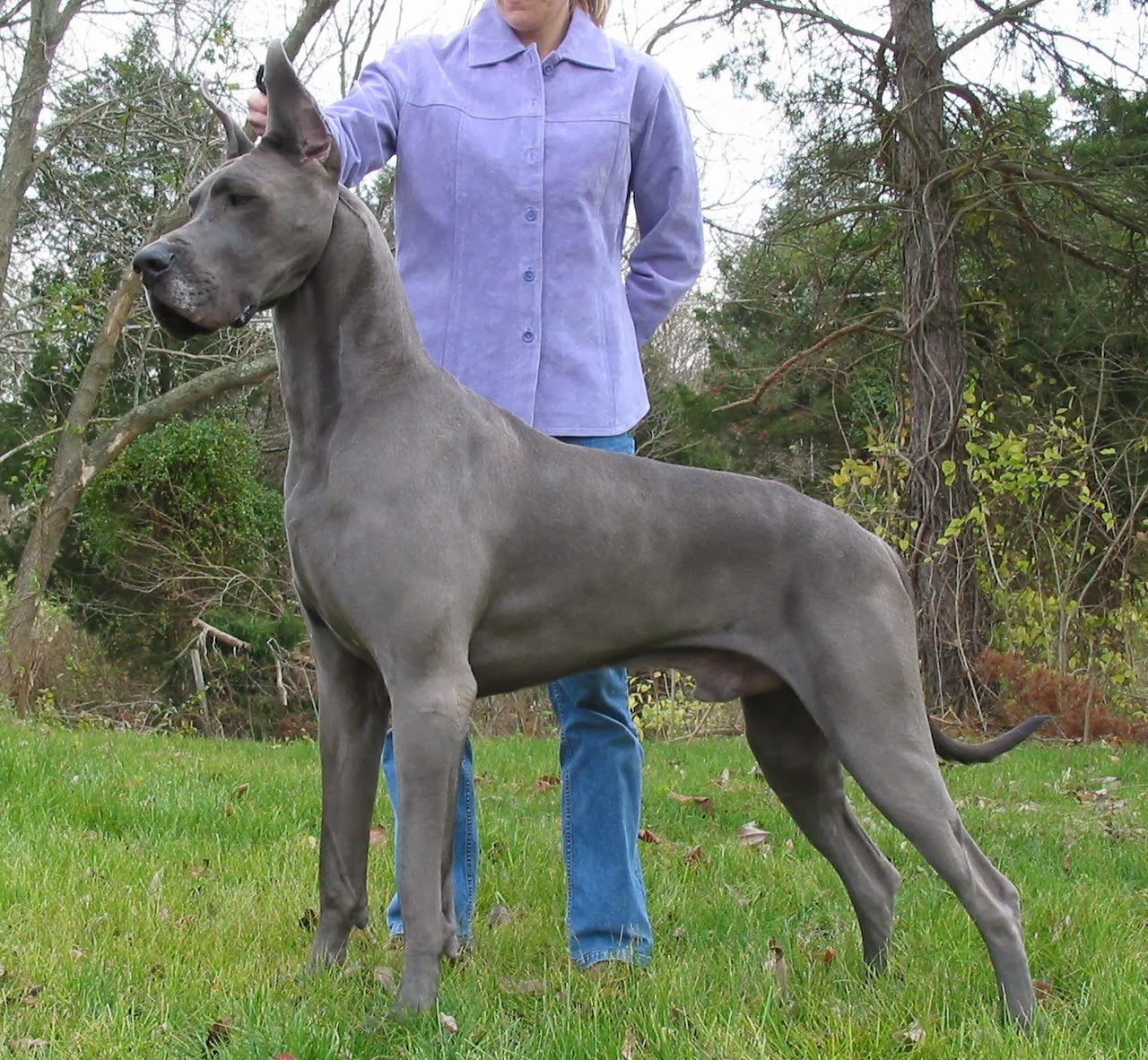
Facts About Blue Great Danes


The Blue Great Danes is the most fascinating race of Danes Dogs. it is also the rarest, as this race was almost extinct during the 70’s “dog-mania”. However, the true raisers are trying to revitalize this race. let’s see some facts about the Blue Great Danes, so you would know how to take care of this demanding but also faithful dog.

Feeding facts about the Blue Great Danes

Because of its special construction (big height, long neck, short body), the Blue Great Danes must not receive its food on the soil. You must place the food on a support, so he won’t be obliged to lower his neck too much. Otherwise, his digestion will be slowed, causing stomach problems.

As for the minerals and vitamins, it is clearly that he will need a quantity corresponding with his size and growth rate, but you must know that excesses can be more harmful than the lack of food. If you want to clearly establish the daily necessary of food, considering the age and the size of the dog, you will have to go to the veterinary at least once every three months.

Training and walking facts about the Blue Great Danes

The physical activity of the dog must be carefully watched, and the excesses are not allowed. On the other hand, a blue Great Danes that sits in the house all day long will have decreased life duration, and he will also risk diseases. This dog needs large spaces for exercise and play; it can be kept in an apartment, as long as you can assure him a few daily walking hours. You can’t keep the blue great Danes outside during the winter, as he can’t accommodate with the cold, so the interior space must allow him freedom of movement.

If you want to raise a female, consider the fact that you will want her to have puppies one day, and their faith depends on how the mother was raised before mating.
If the Great Danes lovers have the necessary resources to raise such a dog, their efforts will be greatly rewarded. The Great Danes is an ideal dog for company, and its force and elegance are completed with an equilibrated character of kindness and respect to the owning family.

It might seem weird for a dog of this size to be so sensitive to his masters. However, the blue Great Danes is sensitive to the behavior of the masters, and their bad moods affect the dog directly. The tensed family atmosphere, the fights and other problems affects the dog, and he can be deeply depressed because of those aspects. If you brawl the dog too often, if you yell, if you are brutal, the dog will develop some serious behavioral problems, and he could sometimes turn against you. An elementary education is mandatory, but it must be made using a positive attitude instead of an authoritarian one. The results will be great, as the Blue Great Danes learns fast. 
{[['']]}

Kentucky Most Poisonous Snakes

Snakes are the most common animals in Kentucky, and despite the common reputation, they are beneficial for the environment. On the other hand, the fear of people and the increased environmental problems reduced the populations of snakes dramatically, and even if Kentucky is still a state where snakes can leave peacefully, some species might disappear in the future.

There are more than 30 snake species in Kentucky, and only 4 of them are poisonous. Moreover, the majority of them live in non-populated areas, like the deep forests and the rocky and sunny areas. this is why accidents rarely happen. However, you must be able to identify the poisonous snakes when you see them.

All the venomous snakes from Kentucky are a part of the Viperidae family, commonly known as vipers. We are talking about the Copperhead, the western Cottonmouth, the Timber Rattlesnake and western Pigmy Rattlesnake. The majority of them are non-aggressive, and they prefer to hide from humans. you can easily distinguish them because of their vertical pupils, and also because of the scale at the top of the tale that is placed on only one row.

Don’t use the vibrating tail as a method to identify a poisonous snake. Some non-poisonous species also have this ability, and many non-venomous species are extinguished because people confused them.

Don’t touch a venomous snake even if it is dead. The body can have a bite reflex, and the bite is also poisonous. The snakes will never attack you unless provoked or harassed. The best idea when you see a snake of this kind is to leave it alone.

The best method to treat a bite of a poisonous snake is to prevent it. leaving the jokes behind, if you are close to a hospital, you should go there immediately. Cutting the wounded area, sucking the venom or electric shocks were proven as ineffective, and the anti-venom serum is the only demonstrated cure for this problem.

The Copperhead is usually mistaken with other species of non-venomous snakes. The best method to identify a snake of this specie is to look at the chestnut cross bands that have the shape of a bow.

The western Cottonmouth is a common dark colored snake that looks like the copperhead when he is young. It has no margins and a single color, making it hard to identify. The water snakes looking the same will quickly hide in the water when approached, while the cottonmouth will take a defensive stance. In fact, this is the best method to identify the cottonmouth, as it is the only aggressive poisonous snake.

The rattlesnakes are also poisonous, but unlike the cottonmouth, this snake hides when approached. However, this is the largest snake from this family, and this is why people fear it the most. The Rattlesnake gains one rattle each time they change the skin, but the rattles might fall, so it is not an accurate method to determine the age of a rattlesnake by counting them. the other snakes from Kentucky are not poisonous, and they are a part of the family Colubridae. 


{[['']]}

Common Snakes In Kentucky


Snakes are common in the state of Kentucky, and considering the great climate and the fauna and flora, the state is ideal for those animals. The common snakes in Kentucky have different sizes, characteristics and habits, and they are also the subject of local urban legends and stories. The smallest Kentucky snake has 7 inches, being more like a worm than a snake, but you can also find the impressive black rat snake with length of 6 feet or more.

While the majority of people are scared about those snakes, considering them as dangerous animals, the passionate researchers and animal lovers are fascinated about them. Some of the species are great pets, and people prefer the size and beauty of the rat snake usually. However, read some details about feeding and taking care of the snake pets, as they are different from any other animals.

The people are also attracted about the snakes’ great combination of colors, about the adaptability of them and also about their capacity to survive in hostile environments. You can find snakes practically anywhere in the state of Kentucky, from the backyards of town houses to the deep forests and rocky areas. Only 4 species are venomous, and the majority of common snakes in Kentucky are not even aggressive. However, every local in Kentucky must be able to differentiate the venomous snakes from the harmless ones.

The copperhead is a venomous snake, and it is also hard to differentiate it from the common snakes in Kentucky. However, the model on the back of this snake can be easily detected, as it has a bow shape with narrow stripes on the edges.

The cottonmouth is another poisonous snake that is feared by people, and it is also the most aggressive of the venomous species.

The timber rattlesnake is the most common venomous snake, but you can hardly see it in the urban areas. It prefers the solitude of the rocky areas and the deep forests, it also likes to hide instead of fighting, and this is why attacks of the rattlesnake are rarely reported.

Another one of the common snakes in Kentucky that is also the preferred pet for snake lovers is the black rat. This snake can easily reach a length of 6 feet, and it is also beneficial for farms, being a known enemy of rats and other small animals around your home.

The prairie kingsnake can be found in the fields of the western Kentucky, preferring the prairies and grasslands. It feeds with birds and small animals, and it is also non-poisonous.

The milk snake takes its name from a legend saying it is able of sucking milk from cows. However, the snake will never be capable of doing so, and it is also known as a hidden snake. You can find it in the vicinity of barns, but this is only because this snake likes to feed with mice and rats.
The garter snake is a relatively small snake that can be found in all the areas of Kentucky, including urban agglomerations. It is a non-poisonous snake, although it bites when attacked, and it also releases a liquid that resembles with venom.

Read More:

Brahminy Blind Snake
{[['']]}

Training and classification of the Great Dane

The Great Dane is not a race; it is more lake a family of dogs. With so many possibilities out there, it might be hard for you to choose the puppy that will grow to be the friend and guardian of the family. Moreover, because of the “dog-mania” from the years 70’s, the genes were compromised, and you will have to check the pedigree of every Great Dane with attention. Let’s see a classification of the Great Dane and some training techniques that can be applied for specific races of this family.

Training


No matter where your dog is situated in the classification of the Great Dane, you will have to apply some basic training techniques, and some special techniques for each race.

The Great Dane has a great temperament, being careful with the kids and also protective. However, with a bad training, he or she might become a moody dog with weak social skills.

Because of his huge proportions, all the dogs from the classification of the Great Dane must be trained as a puppy, so he could be more easily controlled as a grownup. It must be educated so he would not attack people, and especially kids.

In the classification of the Great Dane, the dog has three main colors: yellow, black and harlequin, and blue

Classification of the Great Dane: yellow

The yellow Great Danes can have vertical stripes having a wide gamma of colors, from light golden to intense yellow. If your dog has a black mask, it means he is a great exemplar that is suited for advanced training. Try to avoid those yellow Great Danes with white marks on the chest, as this means the race was compromised. Those dogs make great watchdogs, and they are also friendly to the family and close friends.

Classification of the Great Dane: tiger style

This Great Dane has all the colors from light yellow to intense golden. The black stripes are also appreciated by the passionate of the race. Those dogs usually live longer and they are also more powerful. You will have to train them since their early months of life, as they can easily create habits, and it will be harder for you to change them once they appear.

Classification of the Great Dane: harlequin

The harlequin fog has a pure white color, without any spots of grey or yellow. However, black spots are accepted as long as they are pure black, not grey or other dark nuances. Those dogs are quiet, they make an excellent companion, but they are also a little lazy, so they are not as suited as watchdogs.

Classification of the Great Dane: blue


One of the rarest species of Great Danes, and you are lucky to find a dog of this kind. It is perfect from any point of view, being an excellent watchdog, but also a playful and caring companion. A dog that can’t be “bribed” by the robbers and a great looking exemplar also.

{[['']]}

Brahminy Blind Snake


The Brahminy Blind Snake doesn’t have the common characteristics of the average snake living on the territory of the United States, and this is why it is supposed it was brought accidentally from other countries two or three centuries ago.

The common American name is the Flower Pot Snake. It has a length of 4-6 inches. The female usually lays the eggs during the late spring, and the babies have two inches at most after hatching. This is why it is considered a reptile of the small snake’s family. A curiosity about this species is that it has no males, and the eggs are created trough cell division once a year. The female lays 2-8 eggs a year. Being a small snake, it feeds with insects with a soft body that can be easily digested. From this point of view, it is really useful for farms and crops, as it is known that the Brahminy Blind Snake eats a huge quantity of insects every day.

The snake can be easily confused with a worm because of its small appearance and dark color. It has a dark brown color with light reflexes. However, this is a huge disadvantage, as the Brahminy Blind Snake can be easily observed by birds and other predators. It is also a prey for other snakes, and because of its slow reproducing process, it might become an endangered specie in the future.

Some specialists might consider the Brahminy Blind Snake as a part of the earthworm family. However, the earthworms have their body segmented, while this snake is different. This is the most important difference that makes Brahminy a snake, not an earthworm. Moreover, this snake is not able to increase the length of its body, and this is another noticeable difference. Brahminy also has a spur at the top of the tail.

The Brahminy Blind Snake is one of the smallest snakes in USA and also one of the smallest snakes in the world. The snake lives in South Asia, but it can be found in different areas of the world, being brought there during the industrial and transportation revolution. Of course, it has an incredible adaptability, as you can find this specie of snake from the northern areas of USA to the tropical areas of Asia.

However, we can’t talk about a constant population in USA. The snake was reported in some areas, but we are talking about single exemplars. There are some people interested of breeding this snake in USA, considering its usefulness for agriculture purposes.

The snake can be found in urban and rural areas of USA, and it has no preferences about a certain type of habitat. Considering its feeding preferences, the Brahminy Blind Snake can adapt practically everywhere.

Just as any other subtropical small snake, the Brahminy Blind Snake lives underground, but also in rotten wood and other warm places. During the winter, the snake will rarely get out of its shelter. This snake also likes the fresh dug soil, so you might find it in your backyard or in your garden.

{[['']]}

Are Garter Snakes Dangerous


The Garter Snake is a part of the small snake’s families, being a common snake in Kentucky. It has three yellow stripes on the back, with varied colors. however, its shape and the combination of colors are unique, so you will be able to recognize a snake of this kind. The stripes might have other colors also, and they could also miss completely. in this case, they are replaced with some spots of a dark yellow or brown. Those dark spots can also be found on the belly of the garter snake, and they usually have a light green or a yellow color.

The garter snake is a common snake in the urban areas, and this is why people developed a fascination for it. it is understandable: as long as you see a snake around your house, you might wonder if it is dangerous.

Good news, the garter snake is not poisonous, but it releases a smelly musk if threatened, and some people might find it offensive. In some rare cases, allergies to this musk were reported, so you might check yourself about this matter if you are living in a Kentucky area where this snake is common.

the legends about the garter snake being dangerous appeared because of its resemblance with the copperhead, which is a venomous snake living approximate in the same areas. however, the simplest method to identify a non-poisonous snake is to look at its eyes. The garter snake has horizontal pupils, while all the poisonous snakes have a vertical pupil.

While the garter snake is harmless and sometimes even beneficial, especially for farms where the snakes kill a large number of rats and mice, some people might not want them around. while the deterrents and naphthalene were used commonly to eliminate the snakes, those substances might be harmful for the environment and for you. This is why you should get rid of the garter snake by making the environment less friendly. Eliminate all the piles where they could hide. It is not a guaranteed method, but it will surely decrease the number of snakes on your yard. the snakes might hide in the basement or in the cellar, although the cold dark places are not so comfortable for them. it is also a good idea to cover all the wholes larger than ¼ inch. This way, the snakes will not be able to get in.

The average length of the garter snake is 4 to 26 inches, but the majority of adults have about 20 inches. This is the main difference from the copperhead that could easily reach 42 inches. Look for the shape of the head. All the poisonous snakes have a resembling head with the venom bags placed on the sides, while the non-poisonous spices have a sharp head and usually a slippery aspect. if you want to be certain about a snake, look at its tail. The anal plate is continued on one row to the top of the tail for the venomous snake, while the other species will only have one row. 


{[['']]}

Test Footer

 
Support : Creating Website | Johny Template | Mas Template
Copyright © 2011. LoL Picture Collection - All Rights Reserved
Template Created by Creating Website Published by Mas Template
Proudly powered by Blogger