Latest Pictures :
Recent Pictures

Training and classification of the Great Dane

The Great Dane is not a race; it is more lake a family of dogs. With so many possibilities out there, it might be hard for you to choose the puppy that will grow to be the friend and guardian of the family. Moreover, because of the “dog-mania” from the years 70’s, the genes were compromised, and you will have to check the pedigree of every Great Dane with attention. Let’s see a classification of the Great Dane and some training techniques that can be applied for specific races of this family.

Training


No matter where your dog is situated in the classification of the Great Dane, you will have to apply some basic training techniques, and some special techniques for each race.

The Great Dane has a great temperament, being careful with the kids and also protective. However, with a bad training, he or she might become a moody dog with weak social skills.

Because of his huge proportions, all the dogs from the classification of the Great Dane must be trained as a puppy, so he could be more easily controlled as a grownup. It must be educated so he would not attack people, and especially kids.

In the classification of the Great Dane, the dog has three main colors: yellow, black and harlequin, and blue

Classification of the Great Dane: yellow

The yellow Great Danes can have vertical stripes having a wide gamma of colors, from light golden to intense yellow. If your dog has a black mask, it means he is a great exemplar that is suited for advanced training. Try to avoid those yellow Great Danes with white marks on the chest, as this means the race was compromised. Those dogs make great watchdogs, and they are also friendly to the family and close friends.

Classification of the Great Dane: tiger style

This Great Dane has all the colors from light yellow to intense golden. The black stripes are also appreciated by the passionate of the race. Those dogs usually live longer and they are also more powerful. You will have to train them since their early months of life, as they can easily create habits, and it will be harder for you to change them once they appear.

Classification of the Great Dane: harlequin

The harlequin fog has a pure white color, without any spots of grey or yellow. However, black spots are accepted as long as they are pure black, not grey or other dark nuances. Those dogs are quiet, they make an excellent companion, but they are also a little lazy, so they are not as suited as watchdogs.

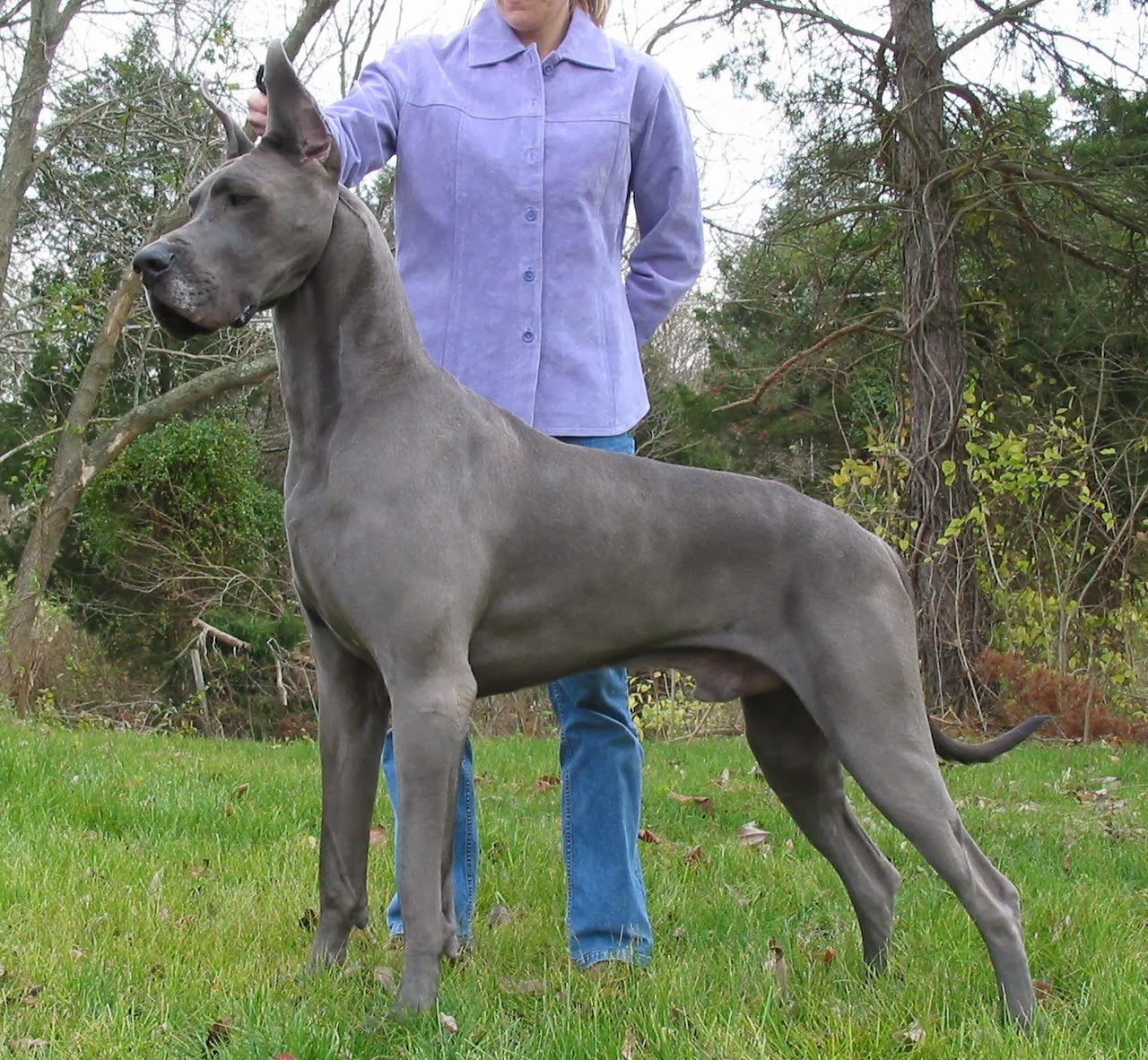
Classification of the Great Dane: blue


One of the rarest species of Great Danes, and you are lucky to find a dog of this kind. It is perfect from any point of view, being an excellent watchdog, but also a playful and caring companion. A dog that can’t be “bribed” by the robbers and a great looking exemplar also.

{[['']]}

Brahminy Blind Snake


The Brahminy Blind Snake doesn’t have the common characteristics of the average snake living on the territory of the United States, and this is why it is supposed it was brought accidentally from other countries two or three centuries ago.

The common American name is the Flower Pot Snake. It has a length of 4-6 inches. The female usually lays the eggs during the late spring, and the babies have two inches at most after hatching. This is why it is considered a reptile of the small snake’s family. A curiosity about this species is that it has no males, and the eggs are created trough cell division once a year. The female lays 2-8 eggs a year. Being a small snake, it feeds with insects with a soft body that can be easily digested. From this point of view, it is really useful for farms and crops, as it is known that the Brahminy Blind Snake eats a huge quantity of insects every day.

The snake can be easily confused with a worm because of its small appearance and dark color. It has a dark brown color with light reflexes. However, this is a huge disadvantage, as the Brahminy Blind Snake can be easily observed by birds and other predators. It is also a prey for other snakes, and because of its slow reproducing process, it might become an endangered specie in the future.

Some specialists might consider the Brahminy Blind Snake as a part of the earthworm family. However, the earthworms have their body segmented, while this snake is different. This is the most important difference that makes Brahminy a snake, not an earthworm. Moreover, this snake is not able to increase the length of its body, and this is another noticeable difference. Brahminy also has a spur at the top of the tail.

The Brahminy Blind Snake is one of the smallest snakes in USA and also one of the smallest snakes in the world. The snake lives in South Asia, but it can be found in different areas of the world, being brought there during the industrial and transportation revolution. Of course, it has an incredible adaptability, as you can find this specie of snake from the northern areas of USA to the tropical areas of Asia.

However, we can’t talk about a constant population in USA. The snake was reported in some areas, but we are talking about single exemplars. There are some people interested of breeding this snake in USA, considering its usefulness for agriculture purposes.

The snake can be found in urban and rural areas of USA, and it has no preferences about a certain type of habitat. Considering its feeding preferences, the Brahminy Blind Snake can adapt practically everywhere.

Just as any other subtropical small snake, the Brahminy Blind Snake lives underground, but also in rotten wood and other warm places. During the winter, the snake will rarely get out of its shelter. This snake also likes the fresh dug soil, so you might find it in your backyard or in your garden.

{[['']]}

Are Garter Snakes Dangerous


The Garter Snake is a part of the small snake’s families, being a common snake in Kentucky. It has three yellow stripes on the back, with varied colors. however, its shape and the combination of colors are unique, so you will be able to recognize a snake of this kind. The stripes might have other colors also, and they could also miss completely. in this case, they are replaced with some spots of a dark yellow or brown. Those dark spots can also be found on the belly of the garter snake, and they usually have a light green or a yellow color.

The garter snake is a common snake in the urban areas, and this is why people developed a fascination for it. it is understandable: as long as you see a snake around your house, you might wonder if it is dangerous.

Good news, the garter snake is not poisonous, but it releases a smelly musk if threatened, and some people might find it offensive. In some rare cases, allergies to this musk were reported, so you might check yourself about this matter if you are living in a Kentucky area where this snake is common.

the legends about the garter snake being dangerous appeared because of its resemblance with the copperhead, which is a venomous snake living approximate in the same areas. however, the simplest method to identify a non-poisonous snake is to look at its eyes. The garter snake has horizontal pupils, while all the poisonous snakes have a vertical pupil.

While the garter snake is harmless and sometimes even beneficial, especially for farms where the snakes kill a large number of rats and mice, some people might not want them around. while the deterrents and naphthalene were used commonly to eliminate the snakes, those substances might be harmful for the environment and for you. This is why you should get rid of the garter snake by making the environment less friendly. Eliminate all the piles where they could hide. It is not a guaranteed method, but it will surely decrease the number of snakes on your yard. the snakes might hide in the basement or in the cellar, although the cold dark places are not so comfortable for them. it is also a good idea to cover all the wholes larger than ¼ inch. This way, the snakes will not be able to get in.

The average length of the garter snake is 4 to 26 inches, but the majority of adults have about 20 inches. This is the main difference from the copperhead that could easily reach 42 inches. Look for the shape of the head. All the poisonous snakes have a resembling head with the venom bags placed on the sides, while the non-poisonous spices have a sharp head and usually a slippery aspect. if you want to be certain about a snake, look at its tail. The anal plate is continued on one row to the top of the tail for the venomous snake, while the other species will only have one row. 


{[['']]}

The Behavior of Wolves


In the popular literature, the packs of wolves are represented by social structures with a strict hierarchy, with an alpha male that reaches this position by fighting. This alpha wolf is followed by the beta males, which are only two or three, and then by the omega wolves, which are usually used for pack attacks. This structure is based purely on relationships, not on relatives. The wolves can create those packs without having blood connections. Usually, the omega wolves are the youngest ones, while the Alpha male resists as the leader as long as it is stronger than all the other wolves in the pack. Hierarchy fights are common amongst wolves, and usually, the one that loses is the one that dies.

In wilderness, the packs are more than nuclear families, which are based on social unity. It is about a pair and its babies, but also about other elements. The packs from Northern Europe are not as compact or united as the ones made by African dogs, but they are not as instable as the ones of coyotes. The southern wolves have a social behavior that resembles with the one of Dingo dogs, but they can also live alone.

The average pack has 5-11 animals, 1-2 adults, 3-6 youngsters and 1-3 babies. There are even larger packs that could get to 40 wolves. The packs rarely adopt other wolves. Usually, they kill them. If a wolf is adopted, it is usually a younger one. Adopting a new wolf means weeks of “testing”, with non-lethal attacks, and the “aspirant” needs to prove that it is worthy to be a part of the pack.
During the periods in which the food is abundant, several packs can unite temporarily. The five month-two years old wolves leave the pack to found their own families. The decision to break from the main family depends on the sexual maturity and competence.

Contrary to the general belief, wolves don’t attack people whenever they see them. It is true that they don’t have any fear, but when a man is attacked, it is usually because he is in the territory of the wolf. During long winters, when food is hard to find, the wolves attack isolated houses, looking especially for domestic animals.

It is dangerous to defend against the wolf alone. Well, you will probably not have any other possibility. If you live in such an isolated house, far from other human settlements, you should carry a fire gun. The wolves can be quiet, and their attack is fast and deadly, so you should be careful whenever you get out of the house. They also have a strong sense of smell, so be careful when you sacrifice animals for your food, as the smell of blood might attract them immediately.

Unfortunately, many wolves were killed because of the aversion of people against them, and many species are extinct. In some areas, the wolf is protected species, but it is really hard to convince people to leave them alone, especially with the historical hate of humans on wolves. 
{[['']]}

The Mexican Axolotl


Many people agree with me when I am saying that the Axolotl is one of the cutest creatures smiling at us from under water! Well, many people don’t even know what this is, because the small animal is almost extinct, but once you will read something about it, you will get in love with it immediately.

The Axolotl lives only in Mexico. It is a carnivore salamander, with a cylindrical shape, which can reach dimensions of 30 centimeters, approximately. The most remarkable characteristic of this species of salamander is the fact that it looks like a larva, even when it reached maturity.

Today, the Mexican Axolotl can only be found in nature near the lakes around the capital Ciudad de Mexico. The Axolotl got its name from the old Aztecs that used to worship it. According to those, the Aztec god of Death had to hide on the bottom of the lake, when the other gods decided to kill him. He transformed himself into this creature, managing to escape.

I will try to describe this animal, although the best idea is to see the photos. It has short legs, four fingers. Usually, it has a dark color, but in captivity, it is possible to raise exemplars of the white color.

This animal only lives in two Mexican lakes, Xochimilco and Chalco, which are both situated near Mexico City. Those are a part of a complex of five lakes. The Aztecs built Mexico City on those lakes, and this is why their productivity was affected. We can say that the development of the city destroys the natural habitat of many animals, including the Axolotl. Moreover, as Mexico does not have such a good legislation to protect the animals, it is expected for this species to be extinct completely pretty soon.

The lakes are known for their “floating gardens”, which are also called “chinampas”. Those are portions of ground situated between the draining channels, which are cultivated by locals with vegetables and flowers to sell in the market. The Axolotl also lives in those channels, and other portions of lake that are still intact. It is possible for those to adapt in other areas of the world, but it was not tried. In captivity, it is raised as a pet, because it looks absolutely cute. Even if it looks like a larva, it is still popular amongst Mexicans.


Unfortunately, it is also used for laboratory experiments, which is a shame. We don’t agree with using hamsters for experiments, but those are just as good as the Axolotl. In the rhythm of disappearance, we expect for this animal to disappear in less than 20 years, which is a shame, considering that it has been living here for million years.


Some American societies showed interest to protect it, but they always have to fight with the lack of interest of local authorities, and with the indifference of the locals. We need to pull the alarm lever about this species, which is threatened like many others today.

Some cute pics Mexican  Axolotl :


{[['']]}

The mysterious duck-bill?

My passion for duck-bills come from the fact that they are so rare, and because they are so mysterious. It is one of the fascinating animals that can’t ever be discovered completely, and as I always liked difficult tasks, I decided to study it and to share my knowledge to the world.

The duck-bill has some characteristics of reptiles, and I assumed for quite a while that it is actually a weird combination of a bird with a snake. Well, this was my conception while I was a child, but it was easily fought by the first serious lesson about bill-ducks at school. It is true that this animal has something from birds and sakes, but it is not like sticking a duck’s head on a snake’s tail. I still remember the laughter of my biology teacher when I first described a duck-bill!

The duck-bill is more like a mammal than a reptile, with a life span of 10-15 years. It has the size of a cat, but the male is a little longer. The average weight of the duck bill is 2 kilograms for males, while the female can barely reach 1 kilogram.

The fur


The fur is the most important protective barrier for the duck bill. It is covered with hair, with the exception of the legs and beak. The duck bill fur is denser than the one of the polar bear, and a brown color. The fur has two layers, and this allows the duckbill to survive in extremely low temperature. Well, I saw a duckbill at -20 degrees Celsius, and it looked like taking a bath in the sun!

The beak

The beak has a system to detect the electric waves, with tactile receptors. When it is warm, the duckbill likes to say in the water to find food it is able to cover the nose, ears and eyes. Yes, I asked myself the same questions: how it is possible for the duck bill to hunt, as long as it is armored like that? The tactile receptors are perfect for the duckbill to find food in water, even if it is hidden under rocks.


The ears

The ears are placed on the lateral of the head, without external parts. Those are also closed when the animal swims, but the hearing is really smooth, anyway.

The legs

The duckbill has four legs, which can expand in horizontal position from the body, making the animal as agile as a reptile. The front legs have a skin that helps swimming. On dry land, the skin retracts, uncovering the sharp claws which are capable of digging the shores of rivers. Well, the claws are also helpful for arranging the fur, because the duckbill is a clean and tidy animal!

The tail

There is nothing more interesting about a duckbill than the tail. It is used for steering in water, and it also has the role to deposit fat for the long winter. A big tail is a sign of health for the duckbill.
{[['']]}

Brown Snake Eagle - Circaetus cinereus


The Brown Snake Eagle is also known after the Latin name of Circaetus cinereus, and it is a part of the Accipitridae family. It is one of the largest eagles in Africa, and the largest snake eagle. It is spread in Southern Africa mainly, but also in other savannah areas.

Adults and juveniles 

The adults and babies are of the same color, but the babies might be of light brown, with some white feathers. However, the majority of them don’t have a single portion of the body covered in white.

Behavior

The Brown Snake Eagle flies quietly and alone, and it rarely screams. Usually, it screams while flying, as a sign of domination. They like to stay on high rocks or pylons for hours. The average life duration is seven years, but they can live up to 10 or even 12 years.

Size and weight

With a length of 70-75 centimeters, and with a wingspan of 165 centimeters, the Brown Snake Eagle is one of the largest African eagles. They weight 1.5-2.5 kilograms at maturity.

Habitat 

The Brown Snake Eagle likes the desert and the arid open spaces, but they also need wooded areas around. However, they only like to hunt around those, not to stay there. They can’t be found in deforested areas.

The Brown Snake Eagle lives especially in Mauritania and Senegal, but also in South Africa. They also migrate North during the rainy season, just to come back during the summer.

Currently, it is estimated that 10 000 – 100 000 Brown Eagles exist in the world. It is not an endangered species, because it does not have many natural enemies, but this could change soon if the feeding habitats are affected by human actions.

Food 

As the name says, the Brown Snake Eagle usually eats snakes and other small reptiles, which can be found in abundance in Africa. They also hunt small mammals and smaller birds. They are not afraid of venomous snakes, because their legs are thick enough to resist to those attacks. However, the cobras can blind the brown eagle with its spit.

They have the same hunting method as other eagles, based on their capacity to see from the heights of the skies. They don’t like to eat while flying, so they will always take their prey on a rock or in a tree, where they can safely eat it.

Reproduction and nesting

A family of brown snake eagles covers a territory of 200 square kilometers. The male proves its worthiness in front of the female by driving and soaring. The female lays eggs once a year. For that, the pair builds a 60-70 centimeters nest, in trees or on high rocks. They also “steal” the nests of other birds, but they put their print on the nest with new leaves and branches. Usually, the female lays one egg. The incubation period is 50 days. The chick needs about 100 days to learn how to fly. The babies are fully independent from their parents a few weeks after fledging.

The Brown Eagles live in protected areas, and they are on the Least Concern List of BirdLife International, meaning that they are not endangered. They are also known as the Brown Harrier Eagle, or as the Ghama in Tsonga language.

The article was written according to the information taken from the following books:

(1) Ferguson-Lees, J.; Christie, D. A. 2001. Raptors of the world. Christopher Helm, London.

(2) Ian Davidson, Sasol, 2006, Southern African Birds: A Photographic Guide.

( 3)  Ian Sinclair, ‎P. A. R. Hockey, 2005, The Larger Illustrated Guide to Birds of Southern Africa.

(4) James Ferguson-Lees, ‎David A. Christie, 2001, Raptors of the World.

(5) Helen Roney Sattler , 1989, The Book of Eagles.
{[['']]}

Test Footer

 
Support : Creating Website | Johny Template | Mas Template
Copyright © 2011. LoL Picture Collection - All Rights Reserved
Template Created by Creating Website Published by Mas Template
Proudly powered by Blogger