Latest Pictures :
Recent Pictures

The Greek Tortoise


The Greek tortoise is spread in northern Africa, the Mediterranean Basin, Asia, and in the Balkans. It is a middleweight tortoise with a green, yellow color. They live in dry areas, on hills and in places with rich vegetation, such as the forests. Contrary to the legends, this tortoise is a fast one. During the day, it runs after food all day long, and during the night or when the weather is really hot, it stays under bushes, stones, or in the call caves appeared in mountains. It usually eats vegetal components, but accidentally, it can eat worms. If the food is not enough, it can eat mud, which has an increased concentration of nutritive substances. Practically, the Greek tortoise can’t die of hunger in natural habitats.


It has a solid shell, and only a few enemies. Only the young tortoises are vulnerable to attacks, as their shell is softer and it can be cracked. In June. The female lays 2-5 eggs, which will hatch in August or September. Sometimes, the babies will enter directly in hibernation until the next spring, if they are born during the winter. The problem is that many tortoises that enter directly in hibernation will die, because they don’t have enough fat reserves to get over the winter. The ideal scenario is the one in which the baby turtle is born with one or two months before hibernation, so it would have time to prepare.


The Greek tortoise can be found in Greece, but it is often found in Eastern Europe and Northern Africa. It is one of the most common types of tortoises that can be used as pets. They are not pretentious to alimentation, they are also resistant to diseases, and they are also friendly. The problem is that you will need a special place for your pet, an enclosed surface of 2 square meters at least.


Greek tortoise habitat


black Greek tortoise


Greek tortoise size


full grown


greek tortoise care


Related Posts:

The Russian Tortoise

The Egyptian Tortoise

Common Types of Tortoise

The African Spurred Tortoise

 Common Tortoises in Europe


{[['']]}

Funny Turtle Pictures

Funny pictures of turtles


{[['']]}

The Russian Tortoise


The tortoise is a nice pet, which needs special care to avoid sudden death and health problems. The food and the feeding rules are strict, especially for the Russian tortoise (testudo horsfieldii). It is an animal that adapts to the most diverse living conditions, including low temperatures. Usually, the Russian tortoise reaches 10-20 centimeters.


When it comes to feeding for the Russian tortoise, it is important to know that the diet is the most important factor that keeps your pet alive. More precisely, improper feeding can lead to abnormal development. You must know all the toxic substances from the diet of the pet, as some of those could really endanger the health of the turtle.


The Russian tortoise must eat moderately and varied. The alimentation must be exclusively vegetarian, and also moderated. This will guarantee the well-being of your pet.

Fruits and vegetables are mandatory, as the pet prefers a large variety of those. However, it is ideal to find fruits and vegetables that have the smallest concentration of pesticides. Here are some of the fruits and vegetables that might be suited: cabbage, mustard leaf, salad, and apples, but only occasionally. You can also add flowers and other plants, such as roses, or hibiscus.

Besides the aliments recommended by specialists, you should not give your tortoise anything else. The Russian tortoise is vegetarian, so meat must be avoided, and also the majority of fruits, as well as bread, pasta and cereals. Moreover, there are many other substances that influence the tortoise negatively, so the turtle could have health problems. The plants with green leaf and bitter taste such as spinach must be avoided. The fitic acid is also harmful, so you should avoid beans and cereals. Unfortunately, besides several vegetables, there are not many good things that you can commonly find in European stores.

 Baby Russian tortoise:


Russian tortoise full grown :


Russian tortoise male and female:


Russian tortoise habitat


Russian tortoise enclosure :


Related Posts:

The Egyptian Tortoise

Taking Care of a Baby Tortoise

 Common Types of Tortoise

 The African Spurred Tortoise

 Common Tortoises in Europe

{[['']]}

The Egyptian Tortoise


The Egyptian Tortoise (Testudo Keinmanni), occasionally called Pseudotestudo is a part of the dry land family of tortoises (Testudinidae).

The Egyptian tortoise is the smallest of them. During researches in the Nile Delta, the biggest female was found, having only 127 millimeters. The male can reach 100 mm. those small animals are noticed because of their beautiful color of the shell. The edges are mostly brown. The inferior members are covered with scales,


The environment

The Egyptian tortoise comes from…Libya, where it can be commonly found, but you can also see it in the Nile Valley, and in the southern side of Israel. It is adapted to the hot weather. 50 mm of water per year are enough for the tortoise to survive. It is a protected species, so commerce with this turtle is strictly forbidden and punished severely. If you want such a tortoise, you need a good reason, and you also need to prove to the authorities that you have the right to own such an animal.

 
Living style

The Egyptian tortoise lives in arid places, in steppes and deserts. The shell has light colors, protecting the body from sunrays. From June to August, the temperature in those areas is too high, and the turtle needs its rest. It buries in the sand for this period, and it hibernates for about two months. It is active during the rest of the year. During the winter, the temperatures are low, and the humidity is high, so the small animals also burry in the sand for short periods. When the sun rises, they come out to light. The spring is the richest season when it comes to food, as it is the time when the desert flourishes.


Reproduction

The female digs in March and April small holes of five centimeters in the sand, where she lays eggs. The number of eggs depends on the size of the female, so those lay about 3-4 eggs once, three times a season. The eggs need a constant temperature of 30-35 degrees, and the babies hatch after 90-105 days. If the temperatures are higher, the babies might hatch a lot faster.

Behavior

The Egyptian tortoise is used with a hot weather. This is why it will inevitably get sick in any European environment. If you really want this kind of turtle, you will need a special place called terrarium. There are only 7500 remained in the entire world, so they must be protected.


The African Spurred Tortoise


Common Tortoises in Europe


{[['']]}

Taking Care of a Baby Tortoise


The natural habitat of a tortoise is different from one species to the other. However, they are predominant in Europe and in the tropical areas of Europe, Asia and America. Some of them hibernate during the winter, while others can only survive in warm climates. Taking care of a baby tortoise is a big responsibility, and you should consider it likewise.

 Baby Tortoise pics


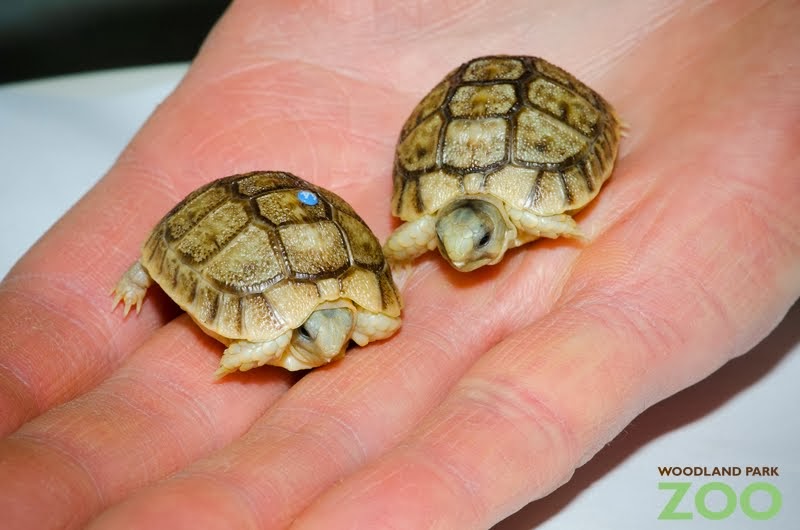
 Baby Tortoise Twins


Baby Tortoise

No matter what kind of tortoise you want, remember that the artificial habitat must imitate the real one. It has to be large, usually of at least two square meters for the average ones. The tortoises usually adapt hardly or don’t adapt at all to an enclosed environment, such as an apartment, even if it has big dimensions. It is also a friendly reptile sensitive to diseases, so it is not recommended to keep tortoises of different species in the same place. Even too much members of the same species kept in the same place are predisposed to severe diseases.


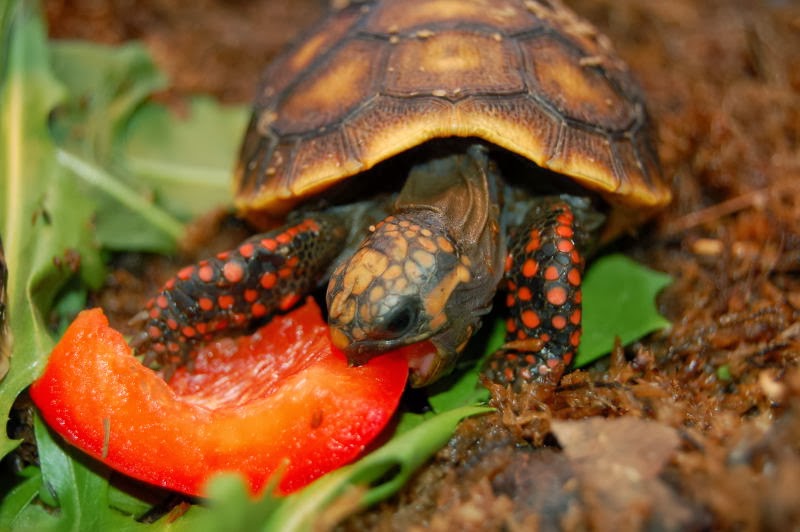
 Baby Redfoot Tortoise eating tomato

Baby tortoise eating

Feeding the baby tortoise

The alimentation of a tortoise and especially of the Greek tortoise, which is the most popular as a pet is 100% vegetal. The tropical species such as the Desert and Steppe Tortoise are omnivores, meaning that they should also eat meat. Don’t feed a European baby tortoise with meat, or aliments that are too rich in proteins, as they can generate problems of the digestive system, lethal affections of the kidneys and also an accelerated growth of the baby. Now, you might be proud when you see the tortoise growing in one day like others in three, but this means that the shell grows in a wrong manner, so the baby might eventually die.

 Cute baby tortoise image


Cute baby tortoise

A good diet for the Greek tortoise is composed of fibers, apple, carrots, and grass. Avoid cabbage, broccoli and spinach, as those will affect the correct absorption of calcium. When the tortoise is mature, you can introduce those aliments in the diet.


Baby sea tortoise in my hands


 Baby sea tortoise

Besides those green aliments that are mandatory for any tortoise, if you have a tropical baby tortoise, you need to introduce meat in the alimentation.

Hibernating

All the European tortoises hibernate. This is an important stage of the life of a tortoise, and in captivity, many of them die because of improper conditions. During hibernation, the animal does not feed, but it consumes substances accumulated under the form of fat. It is better to male sure that the tortoise is perfectly healthy and well fed before the usual hibernating period. If you have doubts about preparing the tortoise for hibernating, it is a good idea to consult a veterinarian for complete consultations.


 Indian baby tortoise  walking

 Indian baby tortoise

Related Posts:

The African Spurred Tortoise

Common Tortoises in Europe

Taking Care of Baby Turtles


{[['']]}

Common Types of Tortoise

There are practically hundreds of types of tortoises, but not all of them are suited as pets. Some of those tortoises live in humid tropical areas, while others can’t survive during the winter. Here are the common species of tortoises that are perfectly suited as pets. 


 Pictures: Dry Land Turtle

The Dry Land Turtle (Testudo Hermani) is common in Europe. They like to live in the forest, but always close to a watercourse or a lake. They have a convex shape, rounded at the back, and the general shape of such a tortoise is rounded. The color of this species is yellow or orange, with black spots and two stripes of the same color. It is a vegetarian species by excellence, eating fruits, vegetables and rarely, insects. It hibernates since October until the end of April, buried in the ground or small caves on the shores of rivers. Usually, it reproduces at the end of April, when the female lays 11-12 white eggs with a diameter of 3.5 centimeters. The eggs hatch after three or four months, and the babies are only 4 centimeters long. Because of the modifications of the climate, this species is currently endangered, therefore protected by law.


Picture: Greek tortoise

The Greek tortoise (testudo greaca ibera) is spread in Africa, in the Mediterranean basin, and also in Asia and Eastern Europe. It is a middleweight tortoise that reaches 20-30 centimeters as an adult. The head, neck and members can be withdrawn totally in the shell. All the older animals have a wider behind. The color of the shell is yellow or light red, and the edges could have a dark brown color. The shell is ornate with brown spots also, on a green background. The tale is shorter compared with the ones of other tortoises.


 Picture: steppe tortoise

The steppe tortoise (testudo horsfieldii) has a reduced dimension, between 20-30 centimeters. It can sometimes be confused with the Greek tortoise. It is different from this one because it has claws on all the four members. The contour is almost circular, with large scales of a brown color, and with black nuances. This tortoise can be found in Central Asia and India. It usually lives in deserts, steppes and oasis, or in the mountain valleys. The exterior is mostly dependent on the environment where it lives.

The males have a reduced corporal weight compared with the one of females of the same age. The mating period is characterized by fights. It is an omnivore species, eating flowers, fruits but also small insects. It is exported in many countries in the world because it is really popular as a pet, but transporting it requires special conditions, so it is better to find a special carrier that can bring you one.

Even if the turtles require water, it is a lot easier to take care of a turtle than it is to take care of a tortoise. The tortoise needs space, and it usually required an outdoor environment. The environment must have elements of the natural habitat of the tortoise, if you want it to be happy and to live for a long time.

Related Posts:

The African Spurred Tortoise

Common Tortoises in Europe

Different types of turtles

Taking Care of Baby Turtles

The Sea Turtles: General Characteristics

Why Are The Sea Turtles Not Suited As Pets?

The Decision of Having a Turtle as a Pet

{[['']]}

Test Footer

 
Support : Creating Website | Johny Template | Mas Template
Copyright © 2011. LoL Picture Collection - All Rights Reserved
Template Created by Creating Website Published by Mas Template
Proudly powered by Blogger